Showing posts with label The Third Teacher. Show all posts

Saturday, January 21, 2017

Intentional Teaching

After receiving her children's first semester kindergarten report cards, a colleague with twins recently shared her astonishment over the amazingly large number of standards children in kindergarten are required to master. Our report card assesses 14 literacy standards and 17 math standards. In addition, we are required to teach multiple science and social studies standards as well, all while meeting the social and emotional needs of children who have entered school with a wide range of skills and behaviors.


As the number of academic demands placed on our youngest learners has increased, the need to be intentional about everything we plan and do as educators has increased as well. The challenge has been to find ways to get rid of the "fluff" while still making the kindergarten classroom an engaging place to play and learn. 


Intentional teaching means that teachers are deliberate, purposeful and thoughtful about the decisions they make and the actions they take in the classroom. It involves foresight and a deep understanding of the standards. It also involves using the classroom as a "third teacher" in order to reach all learners.


Each week when I plan, I try to find ways to "kill two birds with one stone," as the saying goes. For example, recently, I shared the book Snowmen at Night during quiet story time. My students loved the story and it fit nicely with the snow related provocations I had set up around the classroom. During my weekly scrolls through Pinterest, I saw many extension activities to do with the book. The old me would have chosen the cutest activity to do simply because it was cute. However, the new, intentional me found an activity which would allow me to assess my student's ability to meet the following literacy standards:

  • I can put spaces between words when I write.
  • I can sound out words and write them phonetically.
  • I can capitalize the word I when writing.
  • I can recognize, use and name end punctuation.
  • I can read and write kindergarten high frequency words.

In addition, the students would strengthen their fine motor skills as they tore the paper into small pieces and they would work on persevering through a long project, which is a skill we have been working on. And if this wasn't enough, I could also see which skills students were using, but confusing--such as this boy's use of a second vowel in order to make the long i sound in words like by and myself. This would give me something to focus on during our word study lessons, along with the teaching of the inflected ending -ing. And you have to admit--the project is pretty stinkin' cute!


Early in the fall, when the students were adjusting to the long days of school, I tried to get outside as much as possible. As much as I would have loved to use this time to play simply for the sake of playing, I also found intentional ways to sneak in some learning--such as this activity where we practiced demonstrating positional words on the playground equipment. After printing the pictures and mounting them on card stock we worked on beginning writing skills by labeling the pictures with the positional words.


Rigor does not have to replace play. We can be intentional about the activities we plan so that we can help our students meet academic goals while meeting their emotional and social needs as well.


Saturday, January 7, 2017

Play vs. Academics: Finding the Balance

It sat in my son's closet for years. I remember watching my children play with it at our dining room table when they were younger, but it had long been forgotten by them. On a whim, I brought the plastic marble run to my classroom and set it out at our classroom makerspace. I would be gone the first two days after Christmas vacation--returning from a family trip to Mexico, and I wanted something novel for the students to explore in my absence.


After returning to the classroom, I found myself sitting at my teacher table during Discovery Time. It is nearing the end of the semester, and I was knee deep in assessments. The students in my classroom know that during Discovery Time, they may use one of three voice levels: Zero, which is no voice at all; one, which is a whisper voice; or a quiet two, which is a quiet talking voice. This system allows me to work with students at my table without interruption. However, today, it wasn't working. I silently berated my substitute, who no doubt let them talk freely while I was gone. Now I would have to retrain them...


My eye caught a frenzied movement from over near the makerspace area. Looking up from assessing the student I was working with, I noticed a boy jumping up and down in excitement. I stopped what I was doing and watched. The first thing I noticed was the near constant chatter. These students were fired up! Small groups, ranging from 1 to 4 students each, were busily constructing marble runs of various shapes and sizes. They were figuring out what worked and what didn't. They were making adjustments and trying again. They were arguing with one another about what to try next, and then working together to follow the plan of one or a compromised plan of a few. They were playing. They were learning. They were happy.


I soon returned to assessing various students and was thrilled to discover how much growth they had made since I last assessed them in November. I wasn't the only one, however. The students I was working with were proud of themselves when they realized how much they had accomplished. As I listened to students read during a benchmark assessment, I could see the excitement and pride in their faces as they discussed stories they had read. They were learning. They were happy.


As a teacher of young children, I often find myself worrying about what is developmentally appropriate. I worry that children these days are not given enough time to play. As I see what appears to be an increase in disruptive behaviors from year to year, I worry that children are not learning to work with others or to problem solve because they are not allowed to play, make mistakes and solve problems with their peers. 


So I let them play. Twice a day, for 45 to 60 minutes, my students have Discovery Time. Sometimes I worry that it is too long, that the students are missing out on important academic learning time, that they won't measure up when the year is over. Then, I remember balance. I remember that, while they are playing, I am engaging in valuable teaching time with small groups of learners--and those students are learning.  Sometimes, I don't even know how they are learning as much as they are. After all, I am not focusing all of my time on academics. I am not pushing them to learn more or placing worksheet after worksheet in front of them in an effort to "close the gap." 


These are the times I wonder: How does this happen? Then, I remember balance. The children are learning because they have found balance between play and learning. Because they are having their need for play met, their minds are open and eager to learn. After all, playing is learning. They are happy, and research shows that happy children learn better. 


It is still hard to let go of the doubt, however. I know there are children who will not meet every academic standard by the end of kindergarten. They are simply not developmentally ready to do so. Shoving more academics down their throats will not get them there faster. Time, maturity and brain development will get them there. I have learned to accept this, though it is difficult. I know these children need to play, and I cannot tip that balance.


As I was lying on the beach in Mexico, I was so relaxed I couldn't imagine ever going back home. Not once did I think of school, which is rare for me. I returned to school energized and ready to tackle the remainder of the year. I had found time to play, and it made all the difference...

Saturday, December 17, 2016

Discovery Time 2.0


Discovery Time continues to be a favorite time of day for the students in my kindergarten classroom. In fact, on days when have an alternative activity, such as Folk Tale Day or Fort Friday, they still always ask, "Don't we have Discovery Time today?"


Discovery Time is a win-win-win. The students engage in activities they enjoy, they build important life skills while engaging in them, and I get uninterrupted time to meet with small groups. It doesn't get any better than that!


The biggest challenge of Discovery Time is coming up with new activities. The general discovery areas stay the same, but I change out the activities every week or two. Fortunately, I have found many great ideas for provocations on the internet, and I also have been blessed with enough materials to develop my own.  Here are some things we have been doing at Discovery Time since my last Discovery Time post:


Honing fine motor skills and visual acuity by matching nuts and bolts


Exploring how things are constructed at the take apart area

Documenting what we observe at the science table


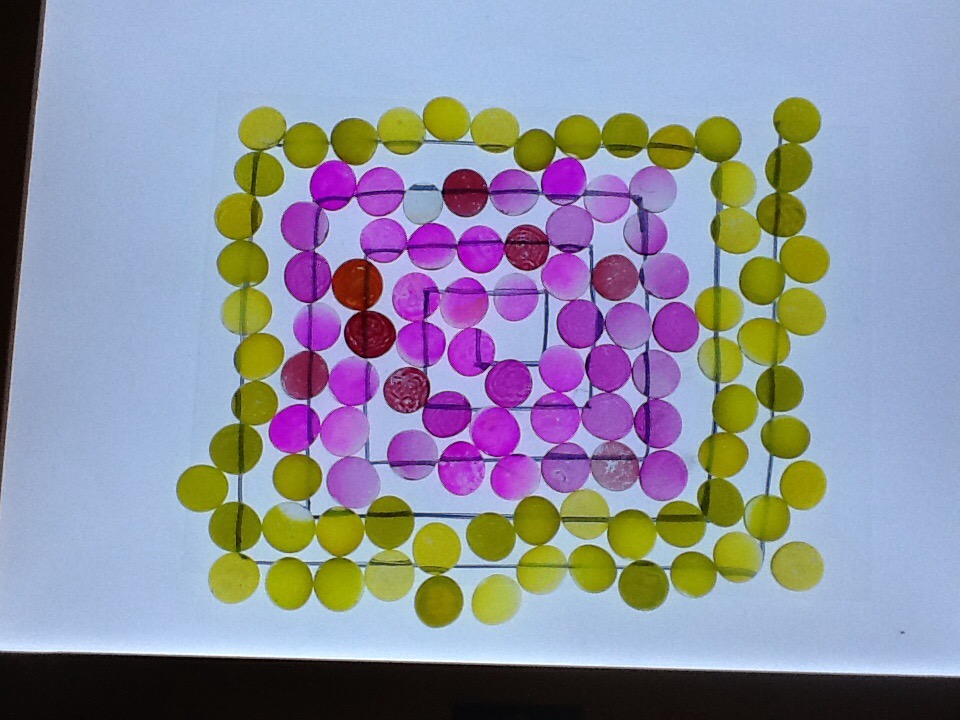
Getting creative with loose parts at the light table

Working with pattern blocks at the math table

Making cards, pictures and letters at the writing table

Playing house at the kitchen area

Sculpting with wire

Making letters with Play Doh


Constructing with Magna Tiles at the light table

Painting still life portraits at the art table


Designing and creating at the makerspace area


Noticing and discovering shells at the science table


Using attribute blocks and numbers at the light table

Constructing cities in the block area

Practicing counting with loose parts at the math area


Exploring lines at the art area

Matching skeletons and insects at the light table

Observing things in nature and comparing those
observations with others

Decorating gingerbread men

Making gingerbread traps

Exploring lines and colors at the light table

Sunday, November 6, 2016

Encouraging Creativity While Maintaining Individuality


When I think back to elementary school, I remember many "one size fits all" art projects. Sure, they were cute, but they all looked the same. One project stands out, however. It was fifth grade, and we got to carve bars of Ivory soap in art class. I remember being extremely proud of my carving, because it didn't look like anyone else's. Chances are, it wasn't gallery worthy, but it was memorable, nonetheless.


There is truth to the saying we teach what we know, because for many years as a teacher, I had my students create lovely art projects that were all relatively cookie cutter. It wasn't until about 8 or 9 years ago that I started to appreciate the value in maintaining individuality while at the same time, encouraging creativity. Looking back, I think it had a lot to do with letting go of the control over the project, and the need to have things look a certain way. As I did that, I came to appreciate the beauty in children's artwork and I also began to realize how much I could learn about a child simply by viewing their creative expressions. In fact, now when I see a cookie cutter art project, I reflexively cringe on the inside. 


With the push down of academic standards, creativity has been shoved by the wayside. This year, as part of my goal to make the classroom the third teacher, I have been experimenting with ways to keep creativity alive in the classroom, while at the same time maintaining individuality. It is constant journey, but here is what I have come up with so far:


Directed Projects

The thing I like about directed projects is they allow a child to create something beautiful, but they do not all look the same. Five and six year old children have limited artistic skills, so we still need to model some things for them. Directed projects allow this to happen. In the past month, I have done two directed projects with my class. The first was a Statue of Liberty directed drawing we did as part of our study of U.S Symbols. This project idea came from a unit I purchased from Deanna Jump on TPT. This is the third year I have done this project, and I am amazed every year how beautiful they turn out.


Just this past week, I did a directed multimedium project with my class as part of our star inquiry. I got the idea from the smartteacher.com. Again, I love how this project encouraged the children to be creative, but maintained their individual styles.


Discovery Time Provocations

Using the classroom as the third teacher has become vital to the success of my classroom. When I set up provocations, I try to think of ways students can be creative with materials without teacher direction. This allows all children to achieve success because there are not parameters they must follow or meet. Children are free to create as they choose. 


This student documented what she observed at the science table. She explained that the stem was curvy and the brown spots on the side were where the pumpkin had been chewed on by an animal.

Magna Tiles allow students to create in multiple ways. They can create two- or three-dimensionsal designs. Placing them on the light table enhances the beauty of the creation and allows students to see how the light reflects the colors of the tiles.

Makerspaces such as this one allow children to design and create anything they choose using the materials available to them.

Allowing free access to materials such as paper, markers, stapler, glue, etc. lets students know that you value creativity and trust them to create freely.

Originally, I had a color scheme in mind for our star cave, but I love the way the students took the initiative to paint it the way they saw fit.

The art easels are always open, encouraging students to paint whenever they feel the desire.
Changing the materials at the light table encourages students to create in new ways.

Mosaic tiles allow students to create using the colors and design they choose. This student created a skateboard.

A cheap Dollar Tree frame and some objects from nature inspired this creative collage.

Projects Which Allow for Variation

Maintaining individuality doesn't have to mean different projects for everyone. Simply allowing the children to cut, tear and create the project that you describe rather than using pre-cut pieces encourages a child to be creative and successful in his/her own way, as these projects demonstrate.


Torn paper flags created as part of our study of U.S. symbols

Another torn paper project--carrots created during our carrot inquiry.

As you can see, there are many ways we can encourage creativity in the classroom, without taking away a student's individual expression. I can't imagine ever going back to cookie cutter art projects again!