Showing posts with label beginning of the year. Show all posts

Thursday, August 4, 2016

The Third Teacher: The Big Reveal


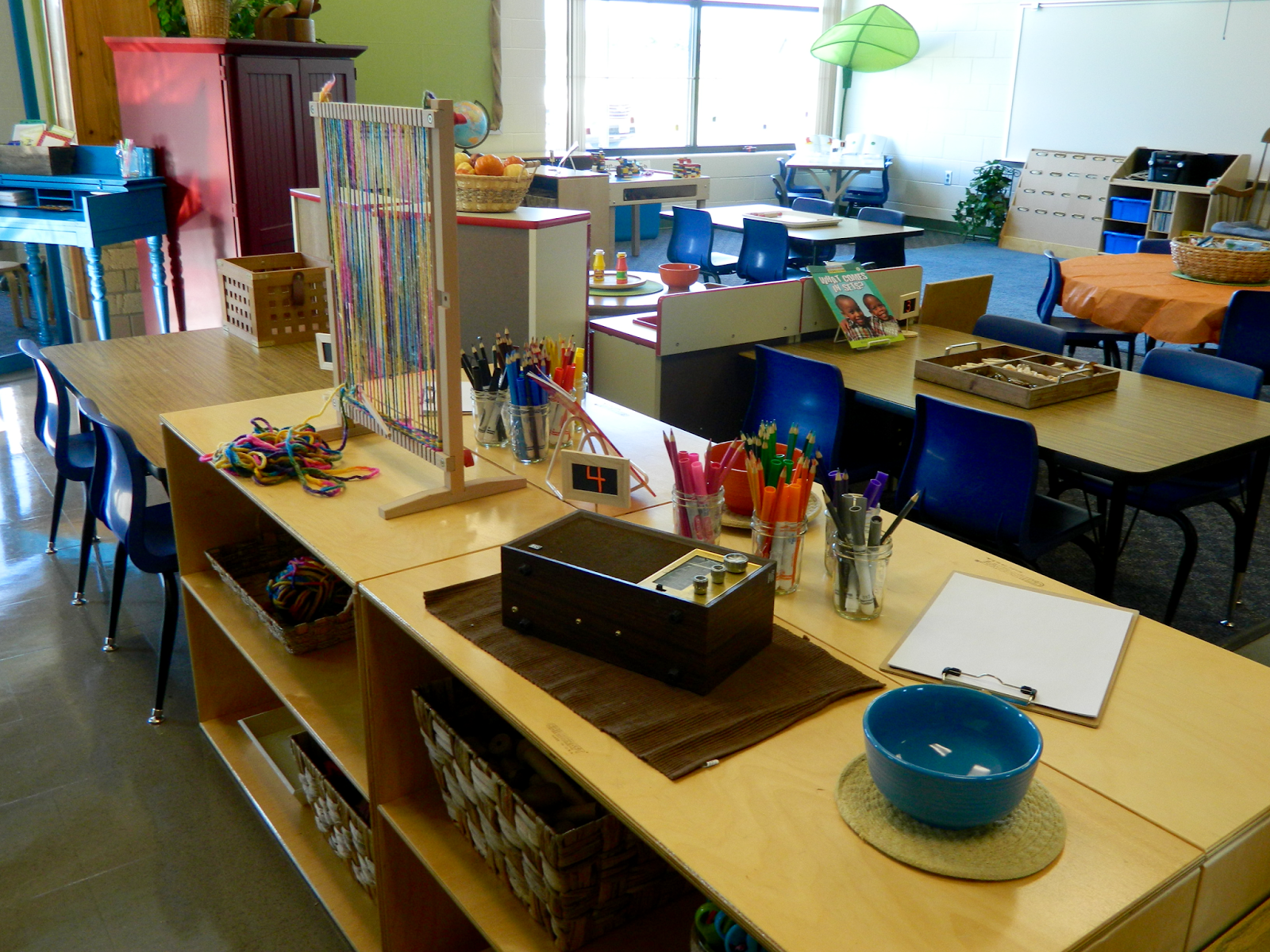
I am extremely excited about my classroom makeover!  Using what I have learned from research (see "Inspiration" post here) and from reading the blog posts of other teachers who believe the classroom can function as the third teacher, I have come up with a design I am excited to share.  In my very first blog post (see "The Third Teacher" post here), I posted pictures of my what my classroom looked like midway through last year.  If you look back at those pictures and then at the pictures below, you will see the transformation.  


My goal was to create a calm, homey setting that invites students to wonder, discover, learn and explore.  I can't wait for the students to arrive (a month away yet, unfortunately) and for us to share this space together!


view as you enter the classroom


cupboards in cubby area where children's family pictures will hang

large group learning area

science table with color provocation

part of construction area

second part of construction area and documentation bulletin board


armoire (filled with books)

freshly painted wall and shelf storage area

sand and water table

art area with self portrait provocation

art easels

mirror and plant

take apart area and weaving loom

hanging branch

self-selected snack area

part of writing area and light tablets (on left)

second part of writing area

quiet reading area

student cubby area

bamboo door curtain (one of my favorite new things)

student browsing boxes with fountain

quiet reading area

quiet reading area

quiet reading area

Looking out from quiet reading area

teacher table 

math provocation area

bathroom

bathroom

view from art area

view into room from discovery area

dramatic play area

Saturday, July 30, 2016

Frontloading Skills and Knowledge


"Before anything else,
preparation is the key to success."

 ~Alexander Graham Bell


In order to set the stage for successful inquiry based learning experiences in my classroom, there are certain skills and knowledge I will need to frontload in the first six weeks. It is always tempting to jump right in to teaching, especially given the long list of state standards we are required to cover, but experience has taught me to "Go slow to go fast." This is easy enough to do in the first few weeks, when everything is new and the days are crazy, but as the children begin to settle in, a sense of urgency begins to take over and I have to force myself to be patient. Believe me, it is not easy!  


I found this great quote by Abraham Lincoln, which is a wonderful reminder about the importance of preparation: 


"Give me six hours to chop down a tree and I will spend the first four sharpening the axe."


I have spent the past few days compiling a mental list of the skills and knowledge I will need to frontload, and this is what I have come up with so far:


Classroom Routines and Procedures

I have found that it is important to teach every routine and procedure I want the students to follow, and to never assume anything. I model what I expect from the students and then give them the chance to practice...and practice...and practice. I know they will make mistakes, and I make it very clear to the students that it is okay to make mistakes, but I do hold them to the expectations I have set. The greatest teaching in the world means nothing if routines and procedures are not established and maintained throughout the year.


Five Senses

A big part of inquiry based learning is the ability to observe and ask questions.  Before students can become good at observing, they must learn how to use all of their senses.  The five senses are part of our state health standards, and I found a great unit for teaching them last year, so I will kill two birds with one stone by focusing on the five senses during our first month of the school year.


Observation

Students have to be taught to look closely, using all of their senses, in order to notice and discover things about their world. I plan to spend a great deal of time outside during the first month of school practicing the skill of observation. We are blessed with a beautiful nature center at our school and I plan to take advantage of it. Learning to observe objects in our world is one of our science standards, and sets the stage for future learning across the grade levels.


Asking Questions

Wondering and asking questions is at the heart of inquiry based learning. Children enter kindergarten full of wonder.  It is my job to teach them how to take that wonder and learn how to ask questions which will guide them to learn more, which will hopefully lead to more questions.  Knowledge is an endless quest, and I want my students to know that it is okay to wonder and it is always okay to ask questions about what they don't understand.


Teamwork

Learning to work with others is a life-long skill.  I have set up my classroom to be a third teacher which provides natural opportunities for children to work together.  However, I have to be intentional about providing specific opportunities throughout the day for the students to practice working together, listening to one another, and appreciating the thoughts and ideas of others.


Using Appropriate Voices

My classroom is set up to be a place of inquiry, wonder, discovery, thinking, and learning.  These are exciting processes, and there is nothing more fulfilling than watching a child get caught up in the beauty of it all. However, there are times throughout the day when I will be working with small groups, and the students will need to know how to communicate using a quiet talking voice during this time. This is something we will have to practice...repeatedly.


Using Classroom Tools

Children enter kindergarten with differing levels of experience.  Some have been cutting, drawing and writing for years and others have had little, if any, experience with classroom tools. Not only that, but the children who have had experiences may have learned incorrect practices. It is important to take the time to teach students the correct way to cut, hold a pencil, etc. and to be diligent about making sure they maintain good habits when using these tools.


Engaging in Conversation

Young children are very good at talking.  However, that does not mean they are good at carrying on a two-way conversation. This is a skill that needs to be taught and practiced. Children need to learn how to listen to the ideas and thoughts of others and to respond to what they hear. This is not easy, and we all know people who are still learning these skills as adults, myself included.


Letter Formation

In the past, I have taught handwriting over the course of the year. The problem with this is that we begin writing workshop early in the year and as a result, students often learn incorrect letter formation. This year, I plan to hold off on beginning writing workshop until October and to spend time in September teaching correct letter formation, with the hope of teaching correct practices early on.


Using a Digital Camera

At our school, we are blessed with a classroom set of digital cameras that teachers can check out. I am extremely excited to use the cameras with my students this year, especially during our outdoor learning times. In order to use them effectively, I will need to teach the students how to use the cameras and give them plenty of time to practice with them.


Using the iPad

In addition to the digital cameras, we will be using the iPad regularly in our classroom. I plan to use the Seesaw app this year, and the students will need to know how to scan their QR code and take pictures, videos, etc. I hope to use the iPads to project their work during sharing time and to communicate their learning with parents via online portfolios.


I am sure I will think of other things as the new school year approaches, but this is what I have come up with so far. The most important thing I need to do early on is establish a sense of classroom community. My students need to know I care about them, I am interested in their lives, and I believe they are capable, competent learners. They need to know it is okay to make mistakes and that we can learn from those mistakes. All of these things will set the stage for a classroom in which we can learn and grow together.